
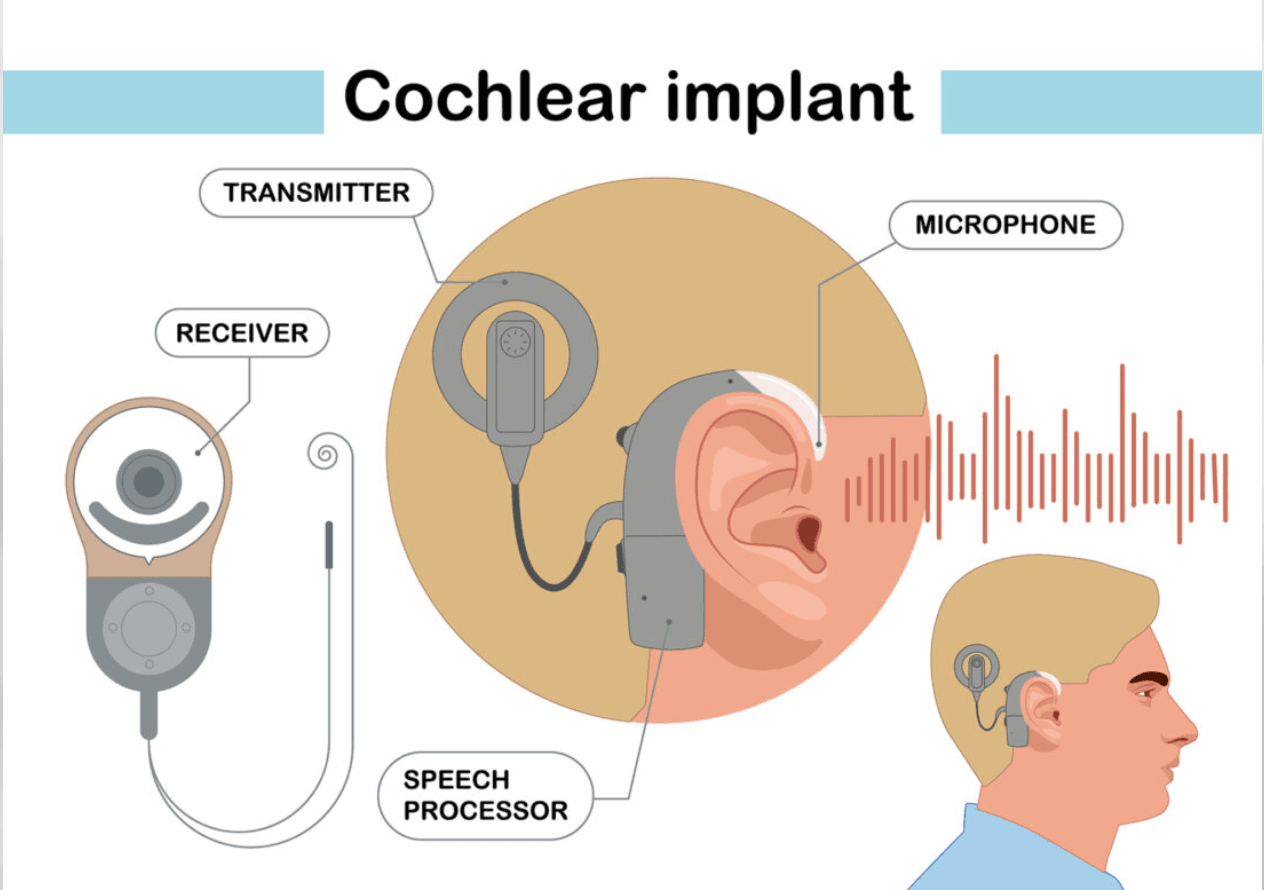
How Does a Cochlear Implant Work? A Simple Guide to Its Main Parts
A cochlear implant is an electronic hearing device that may help eligible children and adults with severe or profound hearing loss who receive limited benefit from appropriately fitted hearing aids.
Unlike a hearing aid, which mainly makes sounds louder, a cochlear implant bypasses damaged parts of the inner ear and directly stimulates the hearing nerve.
A cochlear implant does not restore normal hearing. Instead, it provides signals that the brain can learn to recognize as sound.
What Are the Main Parts of a Cochlear Implant?
A cochlear implant system has two main sections:
• External components worn outside the body • Internal components placed under the skin through surgery
These components work together to collect sound, process it, and send electrical signals to the hearing nerve.
The External Components
1. Microphones
The microphones collect speech and other sounds from the surrounding environment.
Depending on the sound processor, the microphones may use technology designed to focus on speech and manage sound in different listening environments.
2. Sound Processor
The sound processor receives sound from the microphones and converts it into coded digital signals.
It is programmed according to the individual user’s hearing needs. The processor may be worn behind the ear or positioned on the side of the head, depending on the system.
3. Transmitter Coil
The transmitter coil is held against the side of the head, usually using a magnet aligned with the internal implant.
It sends the coded signals from the sound processor through the skin to the implanted receiver.
4. Battery
The external sound processor requires power from a rechargeable or replaceable battery, depending on the processor model.
Battery life and charging instructions vary between devices, so users should follow the manufacturer’s instructions.
The Internal Components
1. Receiver and Stimulator
The receiver and stimulator are placed under the skin. They receive coded signals from the external transmitter and convert them into electrical impulses.
2. Electrode Array
The electrode array is carefully positioned inside the cochlea, which is part of the inner ear.
It delivers electrical signals to different areas of the hearing nerve. These signals then travel to the brain, where they can be interpreted as sound.
How Does Sound Travel Through a Cochlear Implant?
The process takes place in several steps:
1. The microphones collect sound
The external microphones collect speech, music, and sounds from the environment.
2. The sound processor processes the sound
The processor analyzes the sound and converts it into coded signals.
3. The transmitter sends the signals
The transmitter coil sends the coded information through the skin to the implanted receiver.
4. The internal implant creates electrical impulses
The receiver and stimulator convert the signals into electrical impulses.
5. The electrode array stimulates the hearing nerve
The electrode array delivers the impulses to the hearing nerve.
6. The brain interprets the signals
The hearing nerve carries the information to the brain, where the signals can be recognized as sound.
Does a Cochlear Implant Sound Like Natural Hearing?
A cochlear implant does not create normal or completely natural hearing. The listening experience differs between users, and sounds may seem unfamiliar when the processor is first activated.
The brain needs time and practice to understand the new signals. Programming appointments, regular use, hearing rehabilitation, and support from the cochlear implant team are important parts of the process.
Who May Be Considered for a Cochlear Implant?
Cochlear implants may be considered for some children and adults with severe or profound hearing loss who receive limited benefit from hearing aids.
Eligibility cannot be decided through a single online test. It requires a complete assessment that may include:
• Hearing tests • Medical examinations • Evaluation of hearing-aid benefit • Speech and communication assessments • Imaging or other examinations when required • Discussion of expectations and rehabilitation
The final decision should be made with a specialized medical and cochlear implant team.
What Happens After the Implant Is Activated?
After the medical team confirms that the system is ready, the external sound processor is activated and programmed.
The initial settings may be adjusted over several follow-up appointments as the user becomes familiar with the sound. Rehabilitation may also help the user recognize speech and understand different sounds more effectively.
Results vary between individuals and cannot be guaranteed.
How El Nahar Can Help
El Nahar for Medical Solutions provides cochlear implant solutions and specialized support throughout the patient’s hearing journey.
Our team can support hearing assessments, external processor services, programming, compatible accessories, maintenance, and follow-up care. The exact services required depend on the patient’s condition, implant system, and recommendations of the medical team.
Contact El Nahar or visit one of our branches to learn more about cochlear implant assessments, processors, accessories, and support services.
Final Advice
A cochlear implant is a complex hearing system that requires professional assessment, surgery, programming, and ongoing follow-up.
Anyone considering a cochlear implant should discuss the possible benefits, limitations, risks, and rehabilitation requirements with a qualified cochlear implant team.
Sources:
National Institute on Deafness and Other Communication Disorders — Cochlear Implants: https://www.nidcd.nih.gov/health/cochlear-implants
U.S. Food and Drug Administration — What Is a Cochlear Implant? https://www.fda.gov/medical-devices/cochlear-implants/what-cochlear-implant