
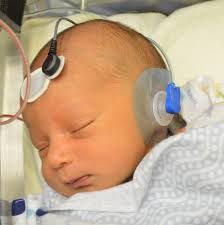
Newborn hearing screening is a quick and important way to check a baby’s hearing shortly after birth. Identifying possible hearing loss early allows families and hearing-care professionals to arrange further testing and begin appropriate support when needed.
Egypt’s newborn hearing-screening initiative has helped increase awareness of early hearing detection and follow-up. Parents should understand what the screening involves, what its results mean, and what steps may be required afterward.
Why Is Newborn Hearing Screening Important?
Hearing plays an important role in the development of speech, language, learning, and communication. Hearing loss may not always be noticeable during the first weeks of a baby’s life, which is why screening is important even when the baby appears to respond to sound.
Early identification may help:
Support speech and language development Reduce communication and learning difficulties Guide families toward appropriate hearing care Begin intervention and rehabilitation earlier Monitor babies at risk of progressive hearing loss
What Happens During a Newborn Hearing Screening?
Newborn hearing screening is usually performed while the baby is sleeping or resting quietly. The screening is painless, does not require the baby to respond, and normally takes only a short time.
Two technologies are commonly used: Otoacoustic Emissions and Automated Auditory Brainstem Response.
Otoacoustic Emissions (OAE)
An OAE screening checks the response of the inner ear to sound. A small, soft probe is placed gently inside the baby’s ear, where it plays quiet sounds and measures the response produced by the cochlea.
If a clear response is recorded, the baby receives a pass result for that screening.
Automated Auditory Brainstem Response (AABR)
An AABR screening measures how the hearing nerve and brainstem respond to sound. Small sensors are placed on the baby’s head, and soft sounds are presented through earphones.
The equipment records the baby’s response automatically while the baby remains asleep or relaxed.
What Does a “Pass” Result Mean?
A pass result means that the baby’s hearing responses were within the expected range at the time of screening. It does not guarantee that hearing loss cannot develop later.
Parents should continue monitoring their child’s hearing and communication development. A hearing assessment should be requested if concerns appear, even when the baby passed the original screening.
What Does a “Refer” Result Mean?
A refer result means that the screening did not record a clear response and that another test is needed. It does not automatically mean that the baby has permanent hearing loss.
Temporary factors may affect the result, including:
Fluid in the middle ear Material remaining in the ear canal after birth Movement or crying during the screening Background noise Incorrect placement of the probe or sensors
Parents should complete the recommended follow-up without unnecessary delay.
What Happens After a Baby Does Not Pass?
The baby may first receive another screening. If the baby does not pass again, a qualified pediatric audiologist may recommend a complete diagnostic hearing assessment.
International guidance recommends:
Hearing screening no later than 1 month of age Diagnostic hearing testing no later than 3 months of age when needed Appropriate intervention no later than 6 months of age when hearing loss is confirmed
The baby’s healthcare and audiology professionals should determine the exact follow-up process.
Which Babies May Need Continued Hearing Monitoring?
Some children can develop hearing loss after passing their newborn screening. Continued monitoring may be especially important when a baby has certain medical or family risk factors.
These may include:
A family history of childhood hearing loss Premature birth Admission to a neonatal intensive-care unit Certain infections during pregnancy or after birth Medical conditions associated with hearing loss Treatments or medicines that may affect hearing Concerns about speech, language, or responses to sound
Parents should discuss these factors with the child’s doctor or hearing-care professional.
Signs Parents Should Watch For
Parents should request professional advice if their baby or child:
Does not react to sudden sounds Does not turn toward familiar voices as expected Shows delayed speech or language development Responds to some sounds but not others Frequently needs sounds to be louder Appears to rely heavily on visual communication
Development differs between children, so these signs do not confirm hearing loss. They indicate that a professional hearing assessment may be helpful.
What Support May Follow a Confirmed Diagnosis?
If diagnostic testing confirms hearing loss, the appropriate plan will depend on its type, degree, cause, and the child’s individual needs.
Support may include:
Regular hearing assessments Pediatric hearing aids Cochlear implant assessment when appropriate Speech and language therapy Auditory rehabilitation Family guidance and communication support Medical evaluation when required
A qualified care team should create an individual plan for each child.
How El Nahar Supports Newborn Hearing Care
El Nahar for Medical Solutions provides professional audiology technologies used for newborn hearing screening and diagnostic assessment. These include OAE and AABR solutions from PATH MEDICAL, together with equipment guidance and technical support for hearing-care professionals.
El Nahar also supports access to hearing technologies and professional follow-up solutions when further hearing care is required.
Final Advice
Newborn hearing screening is only the first step. Parents should complete any recommended follow-up testing and continue monitoring their child’s hearing, speech, and communication development.
A refer result is not a final diagnosis, while a pass result does not replace future hearing assessments when concerns develop. Early professional evaluation provides the best opportunity to understand and support a child’s hearing needs.
Sources
Egyptian Ministry of Health and Population — Newborn hearing-screening services: https://www.mohp.gov.eg/SectorServices.aspx?Deptcode=30&SectorCode=5
Centers for Disease Control and Prevention — Screening for Hearing Loss: https://www.cdc.gov/hearing-loss-children/screening/index.html
Centers for Disease Control and Prevention — Newborn Hearing Screening: https://www.cdc.gov/hearing-loss-children-guide/parents-guide/newborn-hearing-screening.html