
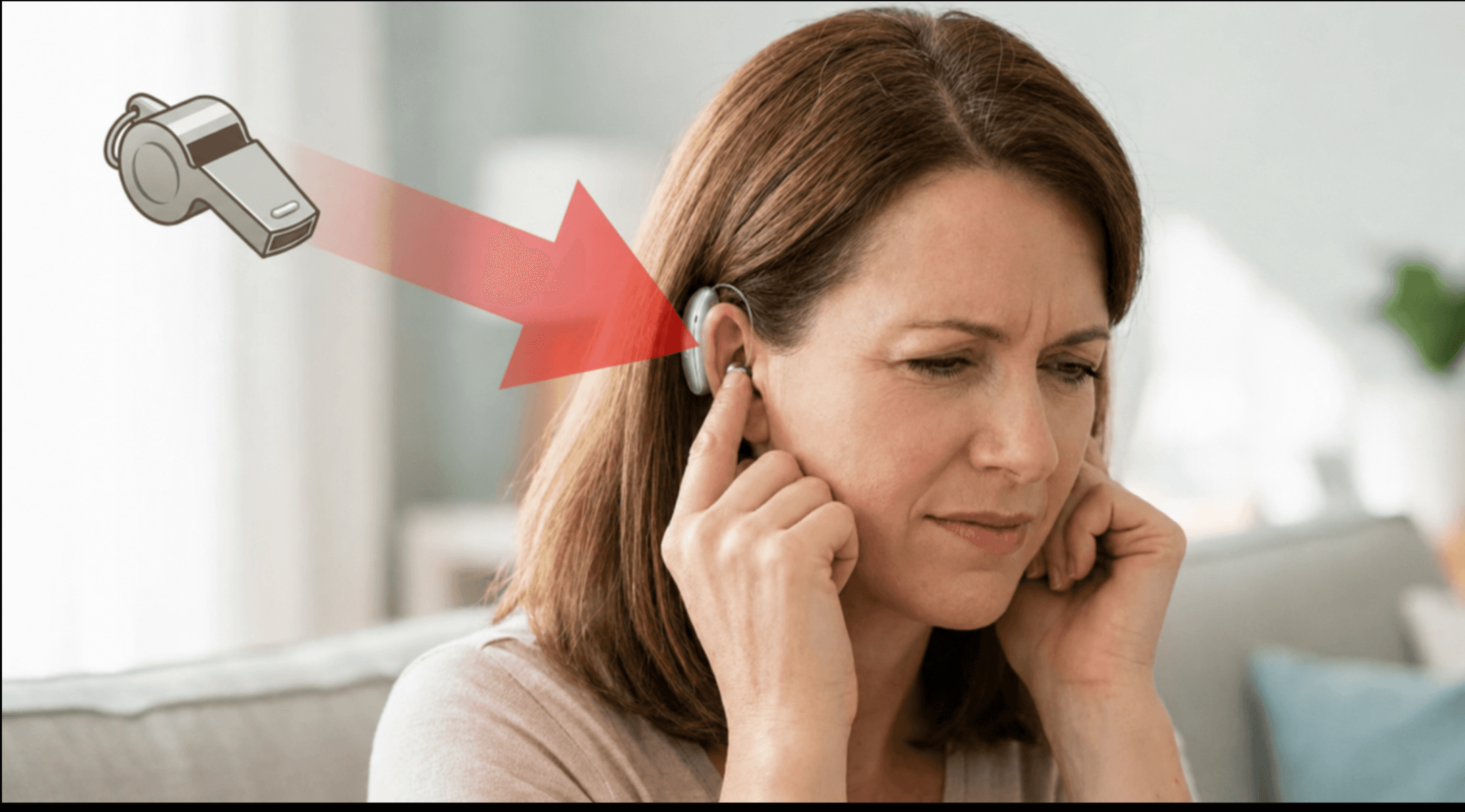
Why Do Hearing Aids Whistle? Common Causes and Solutions
Hearing aids sometimes produce a high-pitched whistling sound known as feedback. It may happen briefly while inserting or removing the device, but frequent whistling may indicate that the hearing aid needs cleaning, adjustment, or professional attention.
Understanding the possible causes can help you respond correctly and keep your hearing aids working properly.
What Is Hearing-Aid Feedback?
A hearing aid collects sound through its microphone, processes and amplifies it, and sends it into the ear through the receiver.
Feedback occurs when amplified sound escapes from the ear and returns to the hearing-aid microphone. The device amplifies the sound again, creating a whistling, buzzing, or squealing noise.
Why Do Hearing Aids Whistle?
1. The Hearing Aid Is Not Inserted Correctly
A hearing aid or earpiece that is not positioned correctly may allow sound to escape from the ear canal and return to the microphone.
Remove the hearing aid carefully and insert it again according to the instructions provided by your hearing-care professional. Do not force the device into your ear.
2. The Earpiece Does Not Fit Properly
Changes in the ear or an incorrectly fitted earpiece may create a gap that allows amplified sound to escape. This may be more noticeable when the volume is increased.
A hearing-care professional can examine the fit and determine whether the earpiece, dome, or earmold needs adjustment or replacement.
3. Earwax Is Blocking the Ear Canal
A buildup of earwax may block sound from travelling normally through the ear canal. The sound may then return toward the hearing aid and cause feedback.
Earwax should be examined and removed safely by a qualified healthcare professional when necessary. Do not insert sharp objects or cotton swabs deeply into your ear.
4. The Hearing Aid Needs Cleaning
Earwax, dust, or other material may block the receiver, microphone, dome, or wax guard. This can affect sound quality and contribute to whistling.
Clean the hearing aid using the tools and instructions recommended for its specific model. If the blockage cannot be removed safely, contact a hearing-care professional.
5. The Volume Is Too High
Increasing the volume beyond the correctly programmed level may cause more sound to escape and return to the microphone.
Avoid making repeated large volume changes. If the hearing aid does not sound loud or clear enough at its normal setting, it may need professional reprogramming.
6. A Part May Be Damaged
Cracked tubing, a damaged earpiece, a loose receiver, or problems with internal components may cause feedback. Damage may not always be easy to see.
Do not open or attempt to repair the hearing aid yourself. Professional inspection can identify the damaged part and determine the correct solution.
7. Your Hearing May Have Changed
If your hearing has changed, the current programming may no longer provide the correct sound levels. Increasing the volume without updating the programming could make feedback more likely.
A new hearing assessment can determine whether the hearing aid needs to be reprogrammed according to your current hearing needs.
When Is Brief Whistling Normal?
A short whistle may occur when you place your hand near the hearing aid or while inserting or removing it. This does not always mean the device is damaged.
However, whistling that continues during normal use, interrupts conversations, or becomes more frequent should be checked by a hearing-care professional.
How El Nahar Can Help
El Nahar for Medical Solutions provides professional hearing-aid inspection, cleaning, maintenance, and programming. Our specialists can check the fit of the device, examine its external parts, and determine whether cleaning, adjustment, repair, or a new hearing assessment is needed.
If your hearing aid whistles regularly or its sound quality has changed, contact El Nahar or visit one of our branches for professional assistance.
Final Advice
Frequent hearing-aid whistling should not be ignored. Check that the device is inserted correctly and clean it according to its instructions. If the problem continues, arrange a professional inspection rather than attempting to repair the device yourself.
Sources:
National Institute on Deafness and Other Communication Disorders — Hearing Aids: https://www.nidcd.nih.gov/health/hearing-aids
Starkey — Hearing Aid Feedback: https://www.starkey.com/blog/articles/2017/09/Feedback-in-hearing-aids