
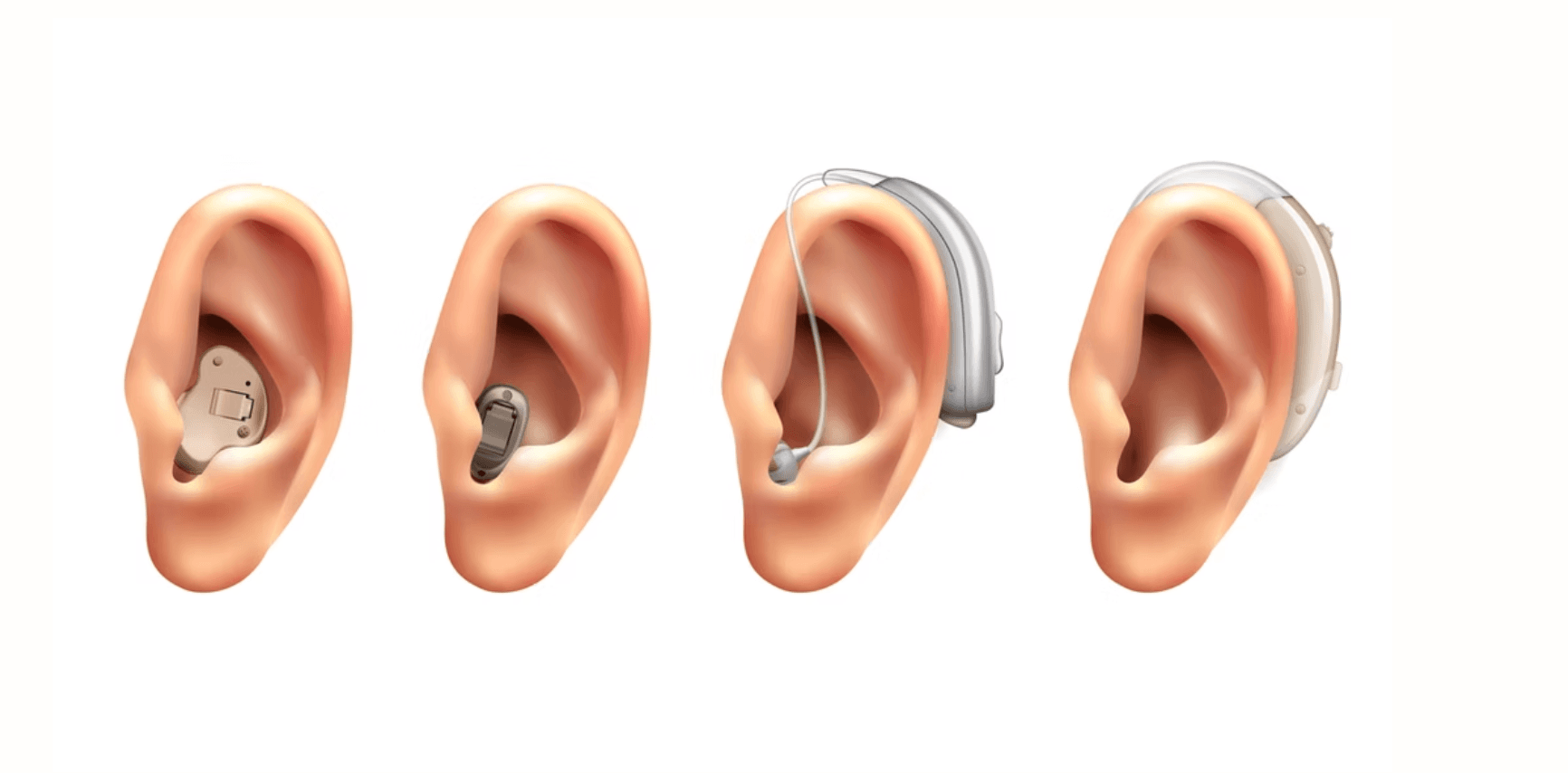
Different Types of Hearing Aids: A Guide to Choosing the Right Type
Modern hearing aids are available in different sizes, styles, and technology levels. Some hearing aid types are worn behind the ear, while others are custom-made to fit partially or completely inside the ear canal.
Choosing the right type depends on several factors, including the type and degree of hearing loss, ear anatomy, comfort, lifestyle, desired features, and the user's ability to handle smaller devices.
For a broader overview of how hearing aids work, modern hearing aid technologies, and the factors to consider when selecting a device, explore our complete guide to hearing aids in Egypt.
What Are the Main Types of Hearing Aids?
The six main types of hearing aids include:
- Behind-the-Ear (BTE) hearing aids
- Receiver-in-Canal (RIC) hearing aids
- In-the-Ear (ITE) hearing aids
- In-the-Canal (ITC) hearing aids
- Completely-in-Canal (CIC) hearing aids
- Invisible-in-Canal (IIC) hearing aids
Each hearing aid type has different features and considerations. The appropriate choice depends on the user's hearing needs, lifestyle, ear anatomy, and professional recommendations.
1. Behind-the-Ear (BTE) Hearing Aids
Behind-the-Ear (BTE) hearing aids contain the main electronic components inside a case worn behind the ear. Sound is delivered through tubing to an earpiece or custom earmold placed in the ear.
BTE hearing aids are generally easy to handle and are available in models that can provide different levels of amplification. Their larger size may also allow for larger controls, battery options, or rechargeable technology, depending on the model.
BTE hearing aids may be suitable for:
People who require higher levels of amplification. Children whose ears are still growing. Users who prefer a device that is relatively easy to handle. People who require a custom earmold.
2. Receiver-in-Canal (RIC) Hearing Aids
Receiver-in-Canal (RIC) hearing aids have a small case worn behind the ear, while the receiver or speaker sits inside the ear canal. A thin wire connects the two components.
RIC hearing aids are generally smaller than traditional BTE devices and are widely available across modern hearing aid ranges. Depending on the model, they may include rechargeable batteries, smartphone connectivity, wireless accessories, and advanced sound-processing features.
RIC hearing aids may be suitable for:
First-time hearing aid users. People looking for a smaller, less noticeable design. Users who want wireless or smartphone connectivity. Different degrees of hearing loss, depending on the specific model.
3. In-the-Ear (ITE) Hearing Aids
In-the-Ear (ITE) hearing aids are custom-made to fit within the outer portion of the ear. The main components of the hearing aid are contained within a single shell.
ITE hearing aids are larger than some other custom hearing aid styles, which may make them easier to insert, remove, and control. Depending on the model, they may also include rechargeable technology, directional microphones, and manual controls.
ITE hearing aids may be suitable for:
People who prefer a custom-made hearing aid. Users who find very small devices difficult to handle. People who prefer controls directly on the hearing aid. Different degrees of hearing loss, depending on the model.
4. In-the-Canal (ITC) Hearing Aids
In-the-Canal (ITC) hearing aids are custom-made to fit partly inside the ear canal, with only a small portion of the device visible in the outer ear.
ITC hearing aids are generally smaller and less visible than ITE devices while still potentially offering some manual controls and wireless features. Available features depend on the model and the size and shape of the user's ear canal.
ITC hearing aids may be suitable for:
People looking for a balance between discretion and ease of use. Users who prefer a custom-made hearing aid. Certain degrees of hearing loss, depending on the device. People who are comfortable handling a smaller hearing aid.
5. Completely-in-Canal (CIC) Hearing Aids
Completely-in-Canal (CIC) hearing aids are custom-made to fit almost entirely inside the ear canal. Typically, only a small removal handle or cord is visible from outside the ear.
Their discreet design is one of their main advantages. However, their small size may limit battery capacity, manual controls, or some wireless features. They may also be more difficult to handle for users with limited dexterity or vision.
CIC hearing aids may be suitable for:
People who prefer a less visible hearing aid. Users with an appropriate ear canal size and shape. People who are comfortable handling small devices. Certain degrees of hearing loss based on professional assessment.
6. Invisible-in-Canal (IIC) Hearing Aids
Invisible-in-Canal (IIC) hearing aids sit deeper inside the ear canal than many other hearing aid styles and are designed to be highly discreet when worn.
Because of their very small size, IIC hearing aids may not offer all the features available in larger devices. They are also not suitable for every ear shape or every degree of hearing loss.
IIC hearing aids may be suitable for:
People for whom discretion is a major priority. Users with an appropriate ear canal size and shape. People who can comfortably handle very small devices. Certain degrees of hearing loss following professional assessment.
Rechargeable vs. Replaceable-Battery Hearing Aids
Hearing aids may use either rechargeable batteries or replaceable batteries, depending on the hearing aid style and model.
Rechargeable hearing aids can typically be placed in a charging unit overnight, eliminating the need to replace batteries regularly. Hearing aids with replaceable batteries, on the other hand, may be useful for users who prefer carrying spare batteries or who may not have regular access to charging.
There is no single option that is best for everyone. The right choice depends on the user’s daily routine, hearing needs, preferences, and the type of hearing aid they use.
For more information, explore the benefits of rechargeable hearing aids and why they have become a popular choice for many users.
What Is the Best Type of Hearing Aid?
There is no single best type of hearing aid for everyone. The right hearing aid depends on several individual factors, including:
The type and degree of hearing loss. The size and condition of the ear canal. Comfort and appearance preferences. Lifestyle and different listening environments. The need for smartphone connectivity and wireless features. Preference for rechargeable or replaceable batteries. The ability to handle and clean a small device. Budget considerations. Maintenance and follow-up needs.
A professional hearing assessment can help determine which hearing aid styles and technology levels may be appropriate for the user’s hearing needs.
For a more detailed guide, read How to Choose the Right Hearing Aid for Your Lifestyle.
Starkey Hearing Aid Styles
Starkey hearing aids are available in a variety of styles, including BTE, RIC, ITE, ITC, CIC, and IIC options. Available technologies, colors, rechargeable options, connectivity features, and other specifications may vary depending on the model and market availability.
El Nahar provides a range of Starkey hearing aid solutions, with different models designed to meet a variety of hearing needs, lifestyles, and technology preferences.
Explore Starkey hearing aids available from El Nahar.
How Can El Nahar Help?
El Nahar For Medical Solutions provides a comprehensive range of hearing aids and hearing solutions, along with hearing aid programming and fitting, maintenance, technical support, and after-sales services.
The appropriate hearing solution can be selected based on the user’s hearing assessment results provided by hearing care professionals, as well as lifestyle, comfort, required features, and individual preferences.
El Nahar also provides technical support and maintenance through an accredited maintenance center, supported by a network of branches and service centers across several governorates in Egypt.
Learn more about El Nahar hearing services.
How Do You Choose the Right Hearing Aid Type?
Choosing a hearing aid should not be based on size or appearance alone. A smaller device may be more discreet, while another hearing aid style may provide power, controls, battery options, or connectivity features that better suit the user’s needs.
The right choice depends on the type and degree of hearing loss, lifestyle, comfort, required features, ease of use, and maintenance needs.
For a complete overview of hearing aid types, technologies, and the factors to consider when selecting a hearing solution, explore our complete guide to hearing aids in Egypt.
Sources
National Institute on Deafness and Other Communication Disorders (NIDCD) — Hearing Aids