
Hearing Aids in Egypt: Types, Technology, and How to Choose the Right Hearing Aid
Hearing aids are among the most effective modern solutions for helping people with hearing loss communicate more clearly and stay connected in everyday life. With continuous advances in hearing technology, hearing aids are no longer simple sound amplifiers. Today, they use advanced digital processing to improve speech clarity, reduce background noise, and adapt to different listening environments.
A wide range of hearing aids in Egypt is now available, with different designs, sizes, technologies, and features. Choosing the right hearing aid should not depend only on appearance or price. It should also consider the type and degree of hearing loss, the user’s daily needs, lifestyle, and professional recommendations.
In this guide from El Nahar For Medical Solutions, we explore how hearing aids work, the main hearing aid types, modern technologies, and the most important factors to consider when choosing the right hearing aid. We also cover care, maintenance, and other hearing solutions available in Egypt.
What Are Hearing Aids and How Do They Work?
A hearing aid is a small electronic device designed to help people with hearing loss hear sounds and understand speech more clearly.
Hearing aids receive surrounding sounds through microphones, process the sound signal according to the user’s hearing needs, and deliver the processed sound to the ear.
Modern digital hearing aids can be programmed according to hearing assessment results. Depending on the model, they may also provide advanced features that improve speech understanding, reduce background noise, and automatically adjust to different listening environments.
When Might Someone Need a Hearing Aid?
Hearing loss can develop gradually, which means some people may not notice changes in their hearing at first.
Signs that may indicate the need for a professional hearing assessment include:
Difficulty understanding speech, especially in noisy environments. Frequently asking people to repeat themselves. Increasing the television or phone volume more than usual. Difficulty following conversations involving several people. Feeling that others are mumbling or speaking unclearly. Difficulty hearing certain sounds or frequencies.
Experiencing these signs does not automatically mean that a person needs a hearing aid. The appropriate first step is a professional hearing evaluation to determine the type and degree of hearing loss and identify the most suitable solution.
What Are the Different Types of Hearing Aids?
There are several types of hearing aids available to suit different degrees of hearing loss, user preferences, and lifestyles.
The most common hearing aid styles include:
Behind-the-Ear Hearing Aids (BTE)
BTE – Behind The Ear hearing aids sit behind the ear and connect to an earmold or earpiece that delivers sound into the ear canal.
They are available in a wide range of power levels and designs and may be suitable for both adults and children depending on hearing needs and professional recommendations.
Receiver-in-Canal Hearing Aids (RIC)
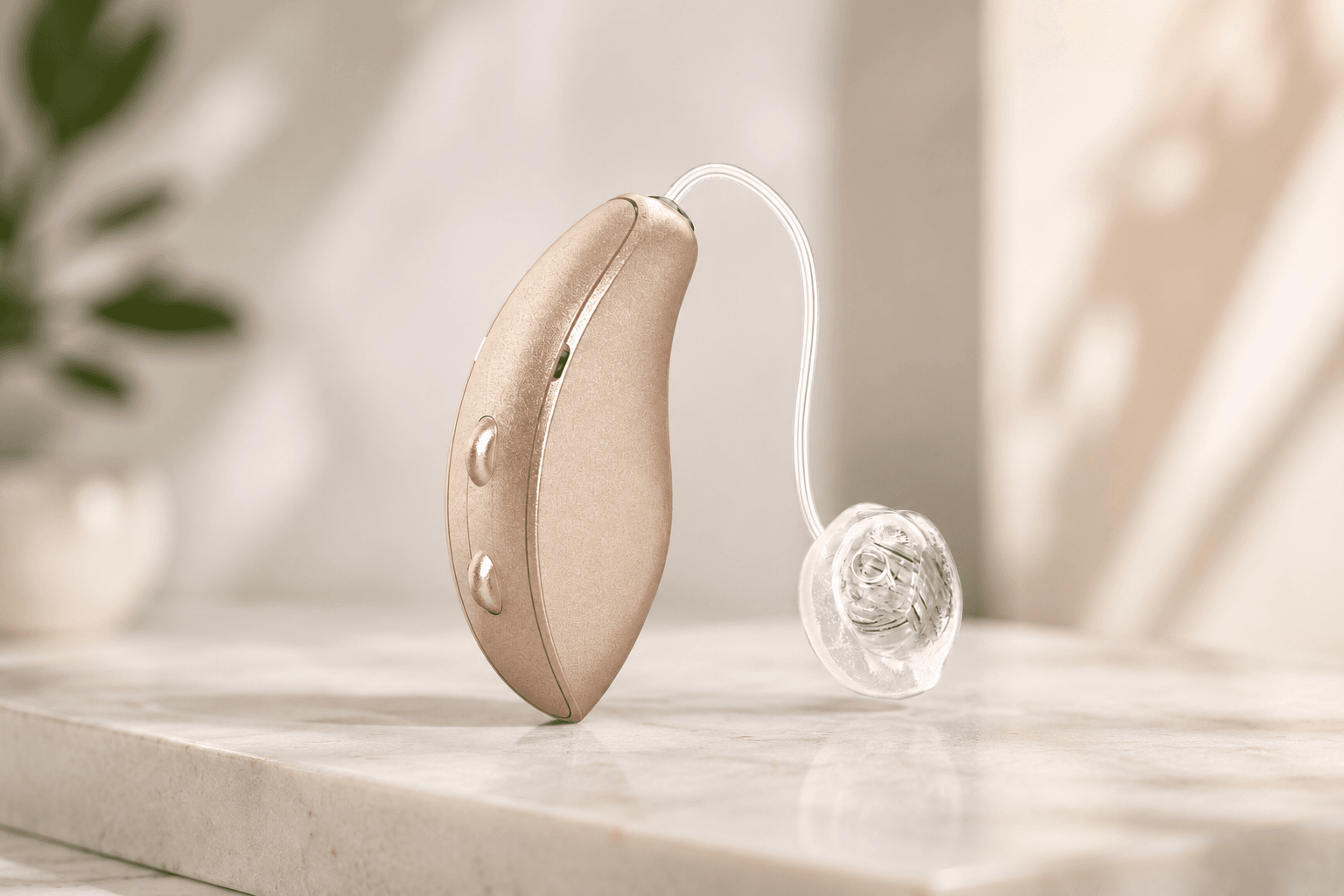
With RIC hearing aids, the main body of the device sits behind the ear, while the receiver is placed inside the ear canal and connected to the hearing aid by a thin wire.
RIC hearing aids are relatively discreet and are available with a wide range of modern features and technologies.
In-the-Ear Hearing Aids (ITE)
ITE – In The Ear hearing aids are designed to fit within the outer part of the ear and may be custom-made to suit the shape of the user’s ear.
Their size and available features vary depending on the model and the user’s hearing needs.
In-the-Canal Hearing Aids (ITC / CIC / IIC)
This category includes smaller hearing aid designs that fit partially or fully inside the ear canal, including:
ITC – In The Canal CIC – Completely In Canal IIC – Invisible In Canal
Some of these styles are designed to be less visible, but they are not necessarily suitable for every degree of hearing loss or every user.
Choosing a hearing aid style should therefore be based on hearing assessment results and individual needs, not on size or appearance alone.
How Do You Choose the Right Hearing Aid?
There is no single hearing aid that can be considered the best choice for everyone. A device that works well for one person may not be the right option for another, even when their hearing loss appears similar.
Choosing the right hearing aid depends on several factors that should be considered with hearing care professionals.
Type and Degree of Hearing Loss
Hearing assessment results are among the most important factors when selecting a hearing aid.
Different users may need different levels of amplification and sound processing depending on the type and degree of hearing loss and the frequencies they have difficulty hearing.
Lifestyle and Listening Environment
A person who spends most of the day in quiet environments may have very different hearing needs from someone who regularly works in busy places, attends meetings, or participates in social activities.
Daily routines and listening environments should therefore be considered when selecting a hearing aid.
Comfort, Size, and Design
Hearing aids are available in many designs, from devices that sit behind the ear to smaller models placed inside the ear canal.
However, appearance should not be the only factor. Comfort, ease of use, cleaning, handling, and maintenance are also important considerations.
Features and Technology
Modern hearing aid technology can include a variety of features depending on the model, such as:
Speech enhancement technologies. Background noise reduction. Smartphone and smart-device connectivity. Rechargeable batteries. Personalized listening programs. Advanced digital signal processing and AI-based features.
More features do not necessarily mean that a hearing aid is better for every user. The most important factor is selecting features that match the user's actual hearing needs and daily lifestyle.
What Are the Most Important Modern Hearing Aid Technologies?
Modern digital hearing aids have developed significantly and are now capable of much more than simply making sounds louder.
Speech Enhancement and Noise Reduction
Advanced sound-processing technologies can help improve speech clarity and reduce the impact of background noise, particularly in environments where several sounds are present at the same time.
Artificial Intelligence and Sound Processing
Some modern hearing aids use artificial intelligence and advanced digital signal processing to analyze the listening environment and automatically adjust how sound is processed.
These technologies may help provide a more comfortable listening experience when moving between different environments.
Smartphone and Smart-Device Connectivity
Many modern hearing aids can connect to compatible smartphones and other electronic devices.
Depending on the hearing aid model and device compatibility, this may allow users to stream phone calls or audio directly to their hearing aids and adjust certain settings through dedicated applications.
Rechargeable Hearing Aids
Rechargeable hearing aids are now available across many modern hearing aid ranges. Instead of regularly replacing disposable batteries, the device can be recharged using a compatible charger.
The choice between rechargeable hearing aids and models that use replaceable batteries depends on the user’s lifestyle, preferences, and daily routine.
Do Hearing Aids Differ for Children and Older Adults?
Hearing aid needs can vary depending on age, the type and degree of hearing loss, the user’s ability to handle the device, and their daily lifestyle. Therefore, hearing aids should not be selected based on age alone. A professional hearing assessment and individual needs should also be considered.
Hearing Aids for Children
Early identification of hearing loss in children is important for supporting the development of speech, language, and communication skills.
When a child needs a hearing aid, the device should be selected according to the degree of hearing loss, the child’s age, hearing needs, and professional recommendations.
Children using hearing aids also require regular follow-up to ensure that the programming continues to meet their hearing needs as they grow and develop.
Hearing Aids for Older Adults
Older adults may experience greater difficulty understanding speech, particularly in noisy environments or during group conversations.
Choosing hearing aids for older adults should therefore consider the degree of hearing loss, ease of use, comfort, daily lifestyle, and the features that the user actually needs.
Hearing Aids vs. Cochlear Implants: What Is the Difference?
A common question when exploring solutions for hearing loss is: what is the difference between hearing aids and cochlear implants?
Hearing aids primarily process and amplify sounds according to the user’s hearing needs and degree of hearing loss.
A cochlear implant works differently. It converts sound into electrical signals that stimulate the auditory nerve and may be considered for some people with severe to profound hearing loss who receive limited benefit from hearing aids.
The decision between hearing aids and cochlear implants should not be based on the degree of hearing loss alone. A specialized medical and audiological assessment is required to determine the most appropriate solution for each individual.
For a more detailed comparison, read Hearing Aids vs. Cochlear Implants: Which Solution Is Right for You?
Hearing Aid Prices in Egypt: What Factors Affect the Cost?
There is no single fixed price for all hearing aids in Egypt. Prices can vary depending on the type of device, technology level, available features, and the individual needs of the user.
Some of the main factors that may affect hearing aid prices in Egypt include:
Technology Level
Hearing aids differ in their sound-processing capabilities, speech enhancement, noise reduction, and ability to adapt to different listening environments.
More advanced technology levels may provide additional features and more sophisticated sound processing.
Hearing Aid Type and Design
Prices may vary between BTE, RIC, ITE, and in-the-canal hearing aids, as well as between different models within the same hearing aid category.
The size or appearance of a hearing aid should not be the only factor considered when comparing available options.
Additional Features
Depending on the model, modern hearing aids may include features such as:
Bluetooth and smart-device connectivity. Rechargeable batteries. Multiple listening programs. Advanced speech and noise processing. AI-based sound-processing features.
Programming and Follow-Up Services
When comparing hearing aid prices, it is important not to consider the price of the device alone.
Programming, fitting, follow-up, maintenance, and after-sales support can all play an important role in the long-term hearing aid experience.
Therefore, choosing a hearing aid should focus on finding a device that matches the user’s hearing needs and lifestyle rather than simply selecting the cheapest or most expensive option.
How Can You Take Care of Your Hearing Aids?
Daily care can help maintain hearing aid performance and reduce problems caused by moisture, dust, earwax, or improper handling.
Important hearing aid care tips include:
Clean the hearing aids according to the recommended instructions. Keep them away from water and excessive moisture. Avoid exposing them to excessive heat. Store them safely when they are not being used. Monitor battery or charging status. Avoid using cleaning products that are not designed for hearing aids. Seek professional maintenance if there is a noticeable problem with performance.
During summer, heat, humidity, sweat, and dust may create additional challenges for electronic devices, making proper hearing aid care particularly important.
Learn more about how to protect hearing aids from heat, dust, and humidity.
Why Do Hearing Aids Whistle?
Some hearing aid users may occasionally notice a whistling sound known as hearing aid feedback.
Feedback can occur for different reasons, including an improperly fitted hearing aid, problems with the earmold or earpiece, earwax buildup, or hearing aid settings that need to be reviewed.
Persistent whistling should not simply be ignored. Identifying the cause can help address the problem correctly rather than causing the user to stop wearing the hearing aid.
For more information, read Why Do Hearing Aids Whistle? Common Causes and Solutions.
Why Are Hearing Aid Programming and Regular Follow-Up Important?
Buying a hearing aid is not the end of the process. Getting the best possible benefit from the device also depends on proper programming, fitting, and regular follow-up.
Hearing aids are programmed according to hearing assessment results and the individual needs of the user. Settings may need to be adjusted over time based on the user’s experience and the listening environments they encounter in everyday life.
Regular follow-up can also help to:
Check that the hearing aid is performing properly. Adjust the settings when necessary. Inspect and clean the device. Identify technical problems early. Review the user’s hearing needs over time.
For this reason, after-sales service, technical support, and maintenance should also be considered when choosing a hearing aid, alongside the specifications and features of the device itself.
How Can Hearing Aids Improve Quality of Life?
The benefits of hearing aids are not limited to making sounds easier to hear. Appropriate hearing aids, when properly fitted and used, may also help users communicate more effectively and participate more comfortably in everyday activities.
Depending on the individual and their hearing needs, hearing aids may help with:
Understanding conversations more clearly. Communicating with family and friends. Participating more comfortably in meetings and social activities. Reducing the effort required to follow conversations. Supporting greater confidence and independence in everyday situations.
For more information, read How Hearing Aids Can Improve Quality of Life for Adults and Older People.
Integrated Hearing and Balance Solutions from El Nahar
El Nahar For Medical Solutions provides more than hearing aids. Our portfolio includes a comprehensive range of hearing and balance solutions designed to support users, hearing care professionals, hospitals, clinics, and specialized medical centers.
Cochlear Implant Solutions
For some people with severe to profound hearing loss, hearing aids may not provide sufficient benefit. In these cases, cochlear implants may be considered following a specialized medical and audiological assessment.
El Nahar provides cochlear implant solutions, sound processors and related accessories, along with technical support and after-sales services.
Explore cochlear implant solutions from El Nahar.
Audiology Devices
Audiology devices plays an essential role in hearing clinics and audiology centers, helping professionals perform the tests and assessments required to evaluate hearing function.
El Nahar provides a range of hearing assessment and audiology devices for hospitals, clinics, and specialized centers in cooperation with international companies specializing in hearing technology.
Explore audiology and hearing assessment devices from El Nahar.
Balance Assessment and Diagnostic Devices
El Nahar also provides specialized balance assessment and diagnostic devices designed to support professionals in evaluating vestibular function and performing different balance assessments.
These solutions include specialized technologies and equipment for hospitals, audiology clinics, and hearing and balance centers.
Discover balance assessment solutions from El Nahar.
Soundproof Audiometric Rooms
El Nahar provides soundproof audiometric room solutions designed to help create an appropriate environment for hearing assessments while reducing the impact of external noise during testing.
These solutions are suitable for the requirements of hospitals, hearing clinics, and audiology centers.
Explore soundproof audiometric room solutions.
Why Choose El Nahar for Hearing Aid Solutions?
Since 1980, El Nahar Medical Solutions has been providing specialized hearing solutions and technologies in cooperation with leading international companies in the hearing industry.
Choosing the right hearing aid is not only about the device itself. Programming, fitting, follow-up, maintenance, technical support, and after-sales services all play an important role in the user’s long-term experience with hearing aids.
El Nahar provides:
A wide range of modern hearing aids. Hearing solutions for different needs and degrees of hearing loss. Hearing aid programming and fitting. Maintenance and technical support through an accredited maintenance center. Hearing aid accessories and supplies. Follow-up and after-sales services. A network of branches and service centers across several governorates in Egypt.
Learn more about El Nahar services.
Frequently Asked Questions About Hearing Aids
How Long Does It Take to Get Used to Hearing Aids?
New hearing aid users may need some time to adjust to hearing sounds through their devices. The adjustment period can vary from one person to another.
Appropriate programming and follow-up can help improve the listening experience gradually and ensure that the hearing aid settings continue to meet the user’s hearing needs.
Can You Wear Hearing Aids All Day?
The amount of time a person should wear hearing aids depends on their individual hearing needs and professional recommendations.
New users may be advised to gradually increase their daily wearing time as they become accustomed to the hearing aids and surrounding sounds.
Do I Need One Hearing Aid or Two?
Whether a person needs one hearing aid or two depends on hearing assessment results, whether hearing loss affects one or both ears, the type and degree of hearing loss, and the individual needs of the user.
The appropriate option should therefore be determined based on a professional hearing assessment.
Can Hearing Aids Connect to Smartphones?
Many modern hearing aids support connectivity with compatible smartphones and other smart devices.
Depending on the hearing aid model and phone compatibility, this feature may allow users to stream phone calls or audio directly to their hearing aids and control certain settings through dedicated applications.
Can You Sleep with Hearing Aids?
In general, hearing aids are removed before sleeping, while following the recommended instructions for cleaning, storage, and charging.
Removing the devices before bed also provides an opportunity to store or recharge them properly, depending on the type of hearing aid.
Can You Wear Hearing Aids While Exercising?
Some hearing aids can be used during many everyday activities and forms of exercise.
However, it is important to protect the devices from excessive moisture, sweat, and impact and to follow the manufacturer’s care instructions for the specific hearing aid model.
Your Guide to Choosing the Right Hearing Solution
Hearing aids have developed significantly in terms of design, digital sound processing, connectivity, and smart technologies, providing a wide range of options for people with different hearing needs.
However, choosing the right hearing aid should not depend on price or appearance alone. The process begins with understanding the type and degree of hearing loss and the user’s daily listening needs, followed by selecting the appropriate hearing aid style and technology and ensuring proper programming, follow-up, and maintenance.
At El Nahar For Medical Solutions, we provide a comprehensive range of hearing solutions and technologies, from hearing aids to cochlear implant solutions, audiology and balance equipment, and soundproof audiometric rooms, supported by maintenance, technical support, and after-sales services.
Explore Our Hearing Aid Solutions
For more information about hearing aids in Egypt and the available options, explore El Nahar's hearing aid solutions or contact our customer service team.
Call 17349