
Why Do Hearing Aids Whistle? Common Causes and Solutions
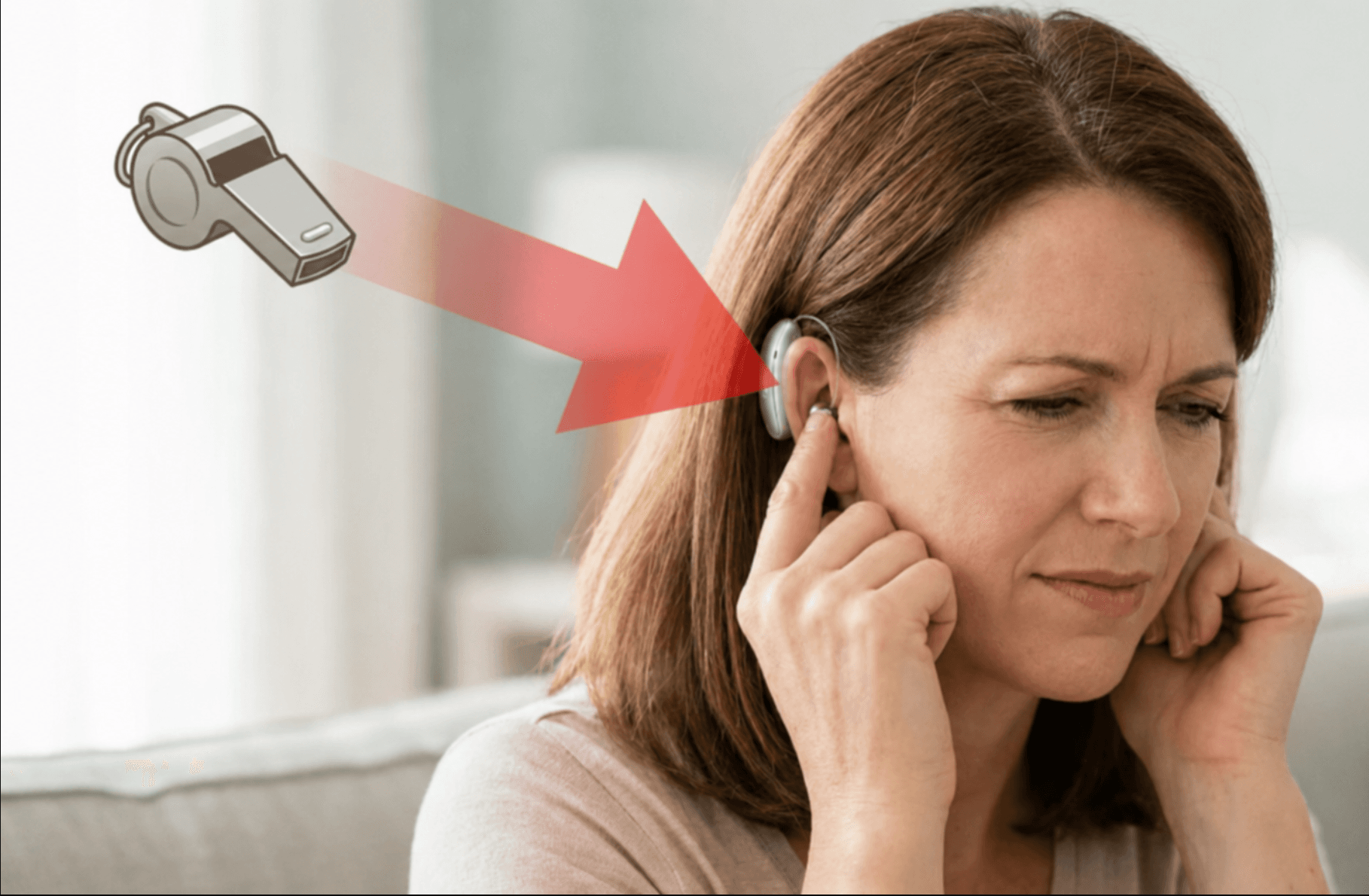
Hearing aids may sometimes produce a high-pitched whistling sound known as hearing aid feedback. A brief whistle may occur while inserting or removing the hearing aid, but repeated feedback during normal use may indicate that the device needs cleaning, adjustment, or professional inspection.
Understanding the common causes of hearing aid feedback can help you manage the problem correctly and determine whether it can be resolved with simple care or requires professional technical support.
To learn more about hearing aid types, technologies, and the factors to consider when choosing the right solution, explore our complete guide to hearing aids in Egypt.
What Is Hearing Aid Feedback?
A hearing aid picks up sound through its microphone, processes and amplifies it, and then delivers the amplified sound into the ear through the receiver.
Hearing aid feedback occurs when some of the amplified sound escapes from the ear and returns to the hearing aid's microphone. The sound may then be picked up and amplified again, creating a high-pitched whistling noise.
A brief whistle can occur in certain situations, but frequent or continuous feedback during normal use may indicate an underlying issue that needs attention.
What Causes Hearing Aids to Whistle?
Hearing aids can whistle for several reasons, ranging from how the device fits in the ear to earwax buildup, cleaning issues, device settings, or damaged components.
1.The Hearing Aid Is Not Inserted Correctly
If the hearing aid, dome, or earmold is not positioned correctly, amplified sound may escape from the ear canal and return to the microphone, causing feedback.
Carefully remove the hearing aid and insert it again according to the recommended instructions. Avoid forcing the device into the ear.
If the whistling continues after the hearing aid has been positioned correctly, another issue may be causing the feedback.
2.The Earpiece Does Not Fit Properly
Changes in the ear or an improperly fitting dome, earpiece, or earmold may create a gap that allows amplified sound to escape.
The problem may become more noticeable when the volume is increased.
A qualified professional can check the fit and determine whether the dome, earpiece, or earmold needs adjustment or replacement.
3.Earwax Has Built Up in the Ear Canal
A buildup of earwax may interfere with the normal movement of sound through the ear canal. This may cause some amplified sound to travel back toward the hearing aid and contribute to feedback.
If earwax buildup is suspected, it should be assessed and safely managed by a qualified healthcare professional when necessary.
Avoid inserting sharp objects or cotton swabs deep into the ear canal in an attempt to remove earwax yourself.
4.The Hearing Aid Needs Cleaning
Earwax, dust, and other debris may accumulate around parts of the hearing aid, including the receiver, microphone openings, dome, or wax filter. This can affect sound quality and may contribute to whistling or feedback.
Clean the hearing aid using the appropriate tools and instructions for your specific model. Avoid using sharp objects or cleaning products that are not recommended for the device.
If a blockage cannot be safely removed through routine cleaning, professional technical support may be required.
For more tips on cleaning and protecting your devices, read How to Protect Your Hearing Aids from Heat, Dust, and Humidity in Egypt.
5.The Volume Is Too High
Increasing the hearing aid volume too much may allow more amplified sound to escape from the ear and return to the microphone, increasing the likelihood of feedback.
Avoid making large or frequent changes to the volume.
If you regularly need to increase the volume to hear clearly, the hearing aid settings may need to be reviewed to determine whether professional adjustment or reprogramming is required.
6.A Hearing Aid Component May Be Damaged
Problems such as damaged tubing, an improperly fitted receiver, a damaged earpiece, or issues with other components may cause repeated feedback.
The damage may not always be visible from the outside.
Do not open the hearing aid or attempt to repair its internal components yourself. A professional technical inspection can help identify the affected component and determine whether maintenance, repair, or replacement is required.
7.Your Hearing Ability May Have Changed
Hearing ability can change over time, which means the current hearing aid settings may no longer match the user's hearing needs as closely as before.
In some cases, increasing the volume without updating the hearing aid settings may increase the likelihood of feedback.
If there has been a change in hearing ability, the results of a recent hearing assessment performed by a qualified hearing care professional may help determine whether the current hearing aid settings remain appropriate or whether reprogramming may be needed.
When Is Brief Hearing Aid Whistling Normal?
A short whistle may occur when you place your hand close to the hearing aid or while inserting or removing the device. This does not necessarily mean that the hearing aid is damaged.
However, the hearing aid should be checked if the feedback:
Continues during normal use.
Occurs frequently.
Interferes with conversations.
Appears suddenly after the hearing aid previously worked normally.
Is accompanied by a noticeable change in sound quality.
In these situations, an inspection may help determine whether the cause is related to the hearing aid fit, cleaning, earwax, device components, or hearing aid settings.
How Can El Nahar Help with Hearing Aid Maintenance?
El Nahar Medical Solutions provides hearing aid maintenance and technical support through an accredited maintenance center, along with hearing aid programming and adjustment services and after-sales support.
The El Nahar team can inspect the hearing aid and its components and determine whether the problem requires cleaning, adjustment, maintenance, or repair.
If your hearing aid whistles frequently or you notice a change in sound quality, you can contact El Nahar for appropriate technical support.
Learn more about El Nahar's hearing aid maintenance and technical support services.
What Should You Do If Your Hearing Aid Keeps Whistling?
Repeated hearing aid feedback should not be ignored. Start by checking that the hearing aid is inserted correctly, inspect its external components, and clean the device according to the instructions for your specific model.
If the whistling continues during normal use, seek professional support rather than attempting to open the hearing aid or repair its internal components yourself.
For more information about different hearing aid types, technologies, and the factors to consider when selecting a hearing solution, read our complete guide to hearing aids in Egypt.
Sources
National Institute on Deafness and Other Communication Disorders (NIDCD) — Hearing Aids
Starkey — Hearing Aid Feedback